
The Giro d’Italia. The Giro. The 'pink one!' What ever you call it, the first of the Grand Tours is back and it's destined to be another legendary event. Expect gravel, snow, tight roads, rolling hills and a sprinkling of chaos.

The Giro d'Italia is the opener for the trio of Grand Tours, exploring the most beautiful & iconic regions of Italy. The 3 week race sees the world’s best cyclists battle it out to win the prestigious winner’s jersey... The Maglia Rosa (yup, that's the pink one!).
Now it's important to state that this is no ordinary cycling event. It has an illustrious history stretching back 109 years (circa 2026), and with 800 million viewers it is one of the most watched sporting events on the planet. That said, if you're new to the sport or the event then don't worry about some of the some of the complexities. We'll cover everything you need to know in this article. So let's start with the basics:
What is a Grand Tour?
In the world of cycling there are three major professional cycling races. The Giro d'Italia (in May), the Tour de France (in July) and the Vuelta a España (in August). Together they are known as the ‘Grand Tours’, and they all follow a standard format: 3 weeks of racing across a variety of stages and 2 rest days. Hit the logo's here to check out the home pages for each:
-

Giro d'Italia
GirodItalia.it -

Tour de France
LeTour.fr -

La Vuelta
LaVuelta.es


How do you win a Grand Tour?
The Grand Tours are seen as the toughest & most prestigious cyclists in the professional peloton, and winning one is no easy feat. But one of the coolest thing about the Grand Tours is that there's actually more than one way to win. Let me explain ...
Cycling is a team sport and just like in football or rugby, each team gives their cyclists specific roles based upon their skill set. This leads riders to become specialists in their chosen category, which are called Classifications. The 3 main classifications are:
- General Classification ('GC' for total time accrued across all stages. The lowest time at any stage is the leader)
- Mountains (specialist climbers win points for their position over mountain tops. Highest points at any stage is the leader)
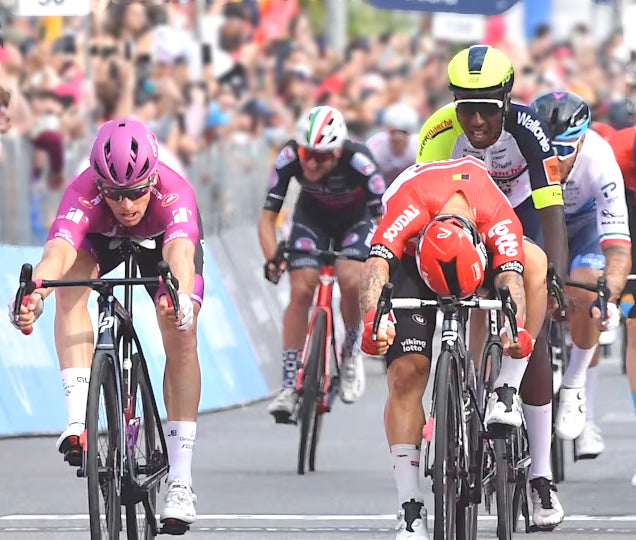
- Points (Awarded to specialists who 'sprint' small dedicated sections within each race. Points are awarded to the fastes, and the highest accrues points at any stage is the Leader)
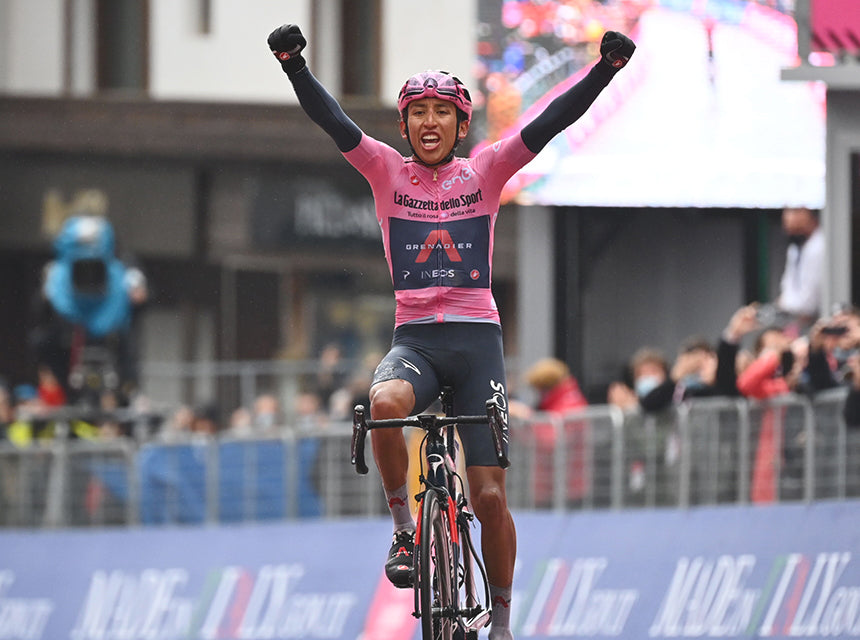
At the end of each day's racing a winner is declared for each of the Categories, and they are awarded the relevant 'Leaders Jersey' to wear the next day. This really helps the fans, as we can easily spot the current leaders amongst the peloton!
The Giro d'Italia in 2026
- This is the 109th edition & runs from 8th May to the 31st May
- With 21 Stages
- Starts in Nessebar, Bulgaria
- Ends in Rome, Italy
- Covering 3,468km (2,155 miles)
- Including over 49,150 vertical metres of climbing
The 2026 Giro is the 109th edition of the race, and the first time in its history the Corsa Rosa has started in Bulgaria. Three opening stages run along the Black Sea and through the country's old capitals, before the race transfers south to Italy for the long climb home. From there, twenty-one stages and 3,468 kilometres take the peloton from the heel of Italy up through Naples, Tuscany and Milan to the decisive mountain stages in the northeast, before the final stage in Rome on Sunday 31 May.
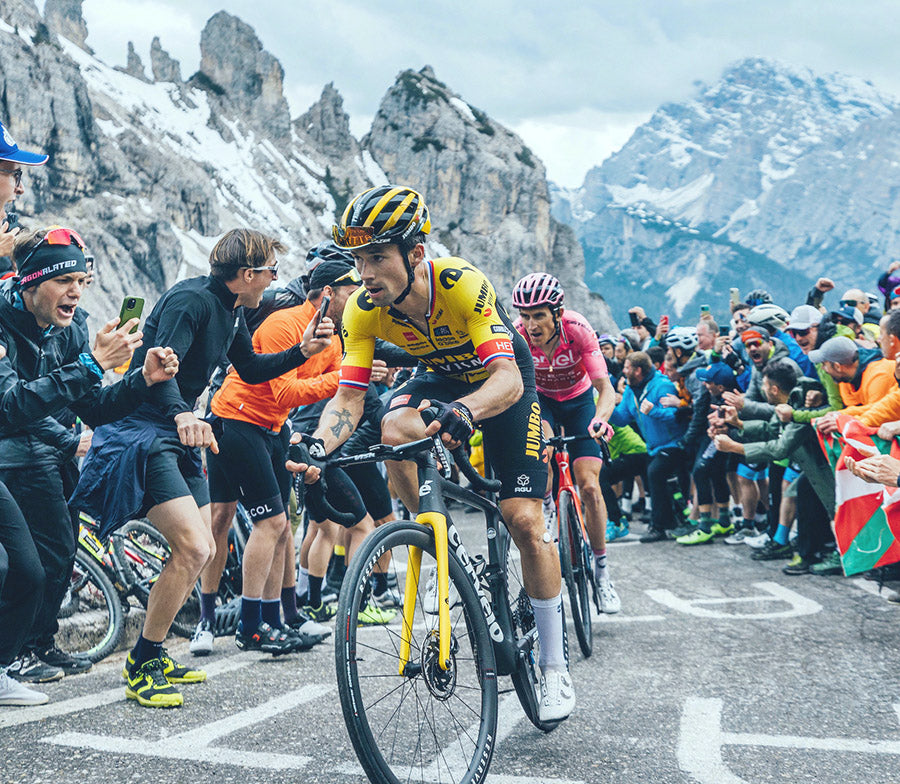
It's a route built for the climbers. Just one time trial: a flat 42 kilometres of Tuscan coast between Viareggio and Massa, tailor-made for the rouleurs. Eight flat stages for the sprinters. Seven medium-mountain stages where the breakaways will fight for it. And five proper mountain stages with seven summit finishes, including the return of the Passo Giau in a Dolomite queen stage from Feltre to Alleghe that packs over 5,000 metres of climbing into a single afternoon. The kind of day that decides Grand Tours.
Nearly 50,000 metres of total elevation across the three weeks. Seven climbs above 2,000 metres. And a final flourish through the streets of Rome on the last Sunday: eight laps of a city circuit, flat and fast and largely ceremonial for the GC riders. A day that's all about the sprint, the prosecco, and someone in pink raising a glass on a balcony.
The contenders going in: Jonas Vingegaard (Visma–Lease a Bike) is the favourite: a two-time Tour de France winner stepping back to the Giro for the first time as the rider everyone wants to beat. Behind him: Thymen Arensman, Felix Gall, Ben O'Connor, and former Giro winner Jai Hindley. The sprinters' line-up is led by Jonathan Milan, Paul Magnier and Kaden Groves. And keep an eye on Filippo Ganna in the time trial, and on Italy's Giulio Pellizzari in the young rider classification, one for the future.
When is the Giro d'Italia?
The first of the Grand Tours kicks off in early May, lasting for 3 weeks with 21 race days and 2 rest days. The race for the Maglia Rosa wraps up by the end of the month, and typically there's just a 4 week break before the Tour de France kicks off at the end of June.
Where is the Giro held?
No surprises here - the Giro is hosted all over Italy! But there are some key regions that tend to be included regularly. Look out for the Dolomites, Lombardy and Piedmont for the mountains, Emilia-Romania, Tuscany and Umbria for the lowlands, and of course a final day in front of the Colosseum in Rome. Occasionally the opening few days are held outside of Italy, and in 2026 the first stage being held in Bulgaria.
How big is the Giro?
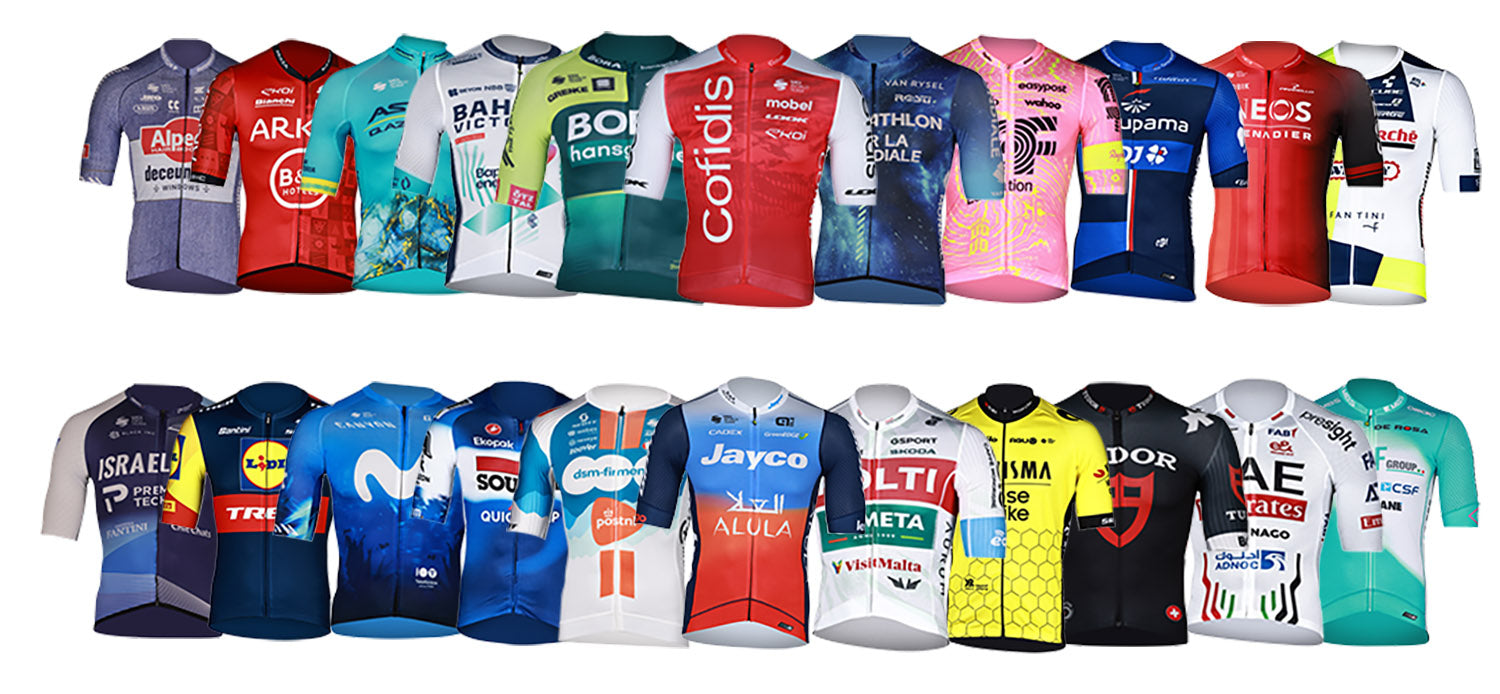
184 riders across 23 Teams (so 8 riders per team), will ride 3,468km with over close to 50,000 vertical metres of climbing. Gulp...
Good to know:
Whilst the Giro d'Italia, Tour de France and La Vuelta are incredibly different, varied and with their own histories & cultures... Today they all have exactly the same framework for competition - with 184 riders, across 23 teams of 8. They are also equally distanced with approximately 3,500km & up to 45,000 metres of climbing. Keep an eye out for the Tdf & Vuelta routes as they are announces, because they may seek to match it!
A little history of the Giro d'Italia
Just like the Tour de France, the Giro d'Italia also has it's roots in the world of local newspapers. Way back in 1909 there was a notable lack of internet availability, and so people got their daily dose of news from their local newspaper publishers. A particularly famous local paper called 'La Gazzetta dello Sport!' sponsored the first event to advertise along their distribution routes. But the coolest thing to know is that this newspaper was printed on pink paper, and this is where the famous Maglia Rosa / Pink Jersey (for the GC leader) was derived from.

What make the Giro unique?
Famously prized for it's chaos, beauty and passion, the Giro d'Italia has a personality and a lure all of it's own. Unfolding through the mountains during spring, sees a mixture of heat, sun, winds and snow that can lay to waste the most thoughtful of team plans. One minute a rider can be on top of the world, descending in pink with seas of adoring fans and a seemingly unstoppable lead.... And the next a crash, mechanical, or side wind can turn the tables of destiny before you can finish an Aperol sprits!
No one knows how this Grand Tour will unfold, but one thing remains constant year upon year - and that's the fans. Known as the 'Tifosi', the Italian fans bring their own passion and verve unlike any other. In the face of such passion, such adoration, and such involvement from the fans - it's almost impossible not to get caught up in the Pink whirlwind year after year!

A guide to the Giro d'Italia Jerseys
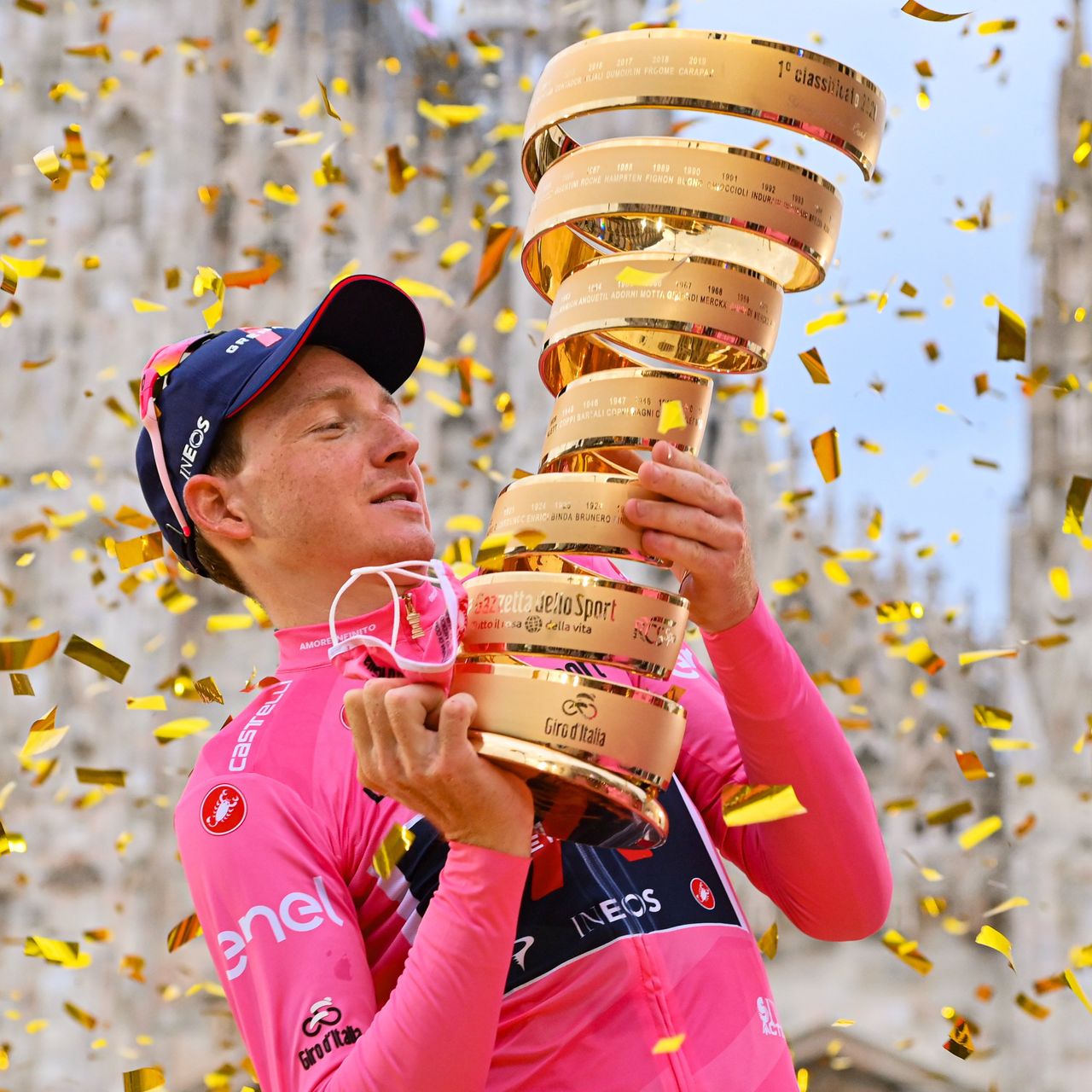
For the General Classification:
Pink Jersey (Maglia Rosa)
This is all about finishing the stages as quickly as possible. The winner of the first stage becomes the leader of the General Classification ('GC') and is awarded the Pink Jersey to wear the next day, From there everyone's times are recorded and added up day-by-day, giving each rider a total riding time. Who ever has the lowest time at the end of each stage wins for that day, and is awarded the Pink Jersey (Maglia Rosa) to wear the next day. To spice things up there are also bonus seconds awarded for crossing certain sections first.
- For the Tour de France the GC jersey is yellow, and for the Vuelta it is red.
- Great examples of GC riders include Tadej Pogacar & Bradley Wiggins.
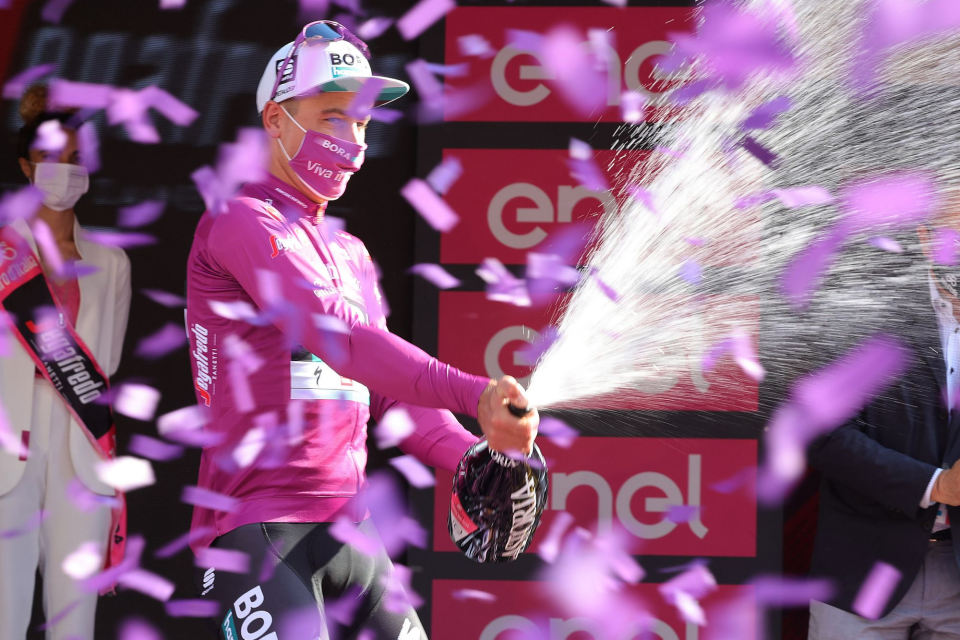
For the Points Classification:
The Purple Jersey (Maglia Ciclamino)
Is focused in winning & accumulating points through each of the 21 stages. The points scoring system can be a bit complicated, but the key thing to know is that the harder the section is the more points the riders can win. So super hilly sprints on a mountain side get high points, and short flat sections get fewer points. Whoever has the highest points score at the end of each race wins the Stage, and is awarded the Purple Jersey (Maglia Ciclamino) to wear the next day.
- The scoring system for the Giro separates the road races into five difficulty categories, each with their own points. On A and B category days the top 15 riders score points, whilst for all others it is just the top 10 riders.
- Great examples of Points/Sprint riders include Mark Cavendish (who won the Purple Jersey in 2013) & Peter Sagan (who won it in 2021).
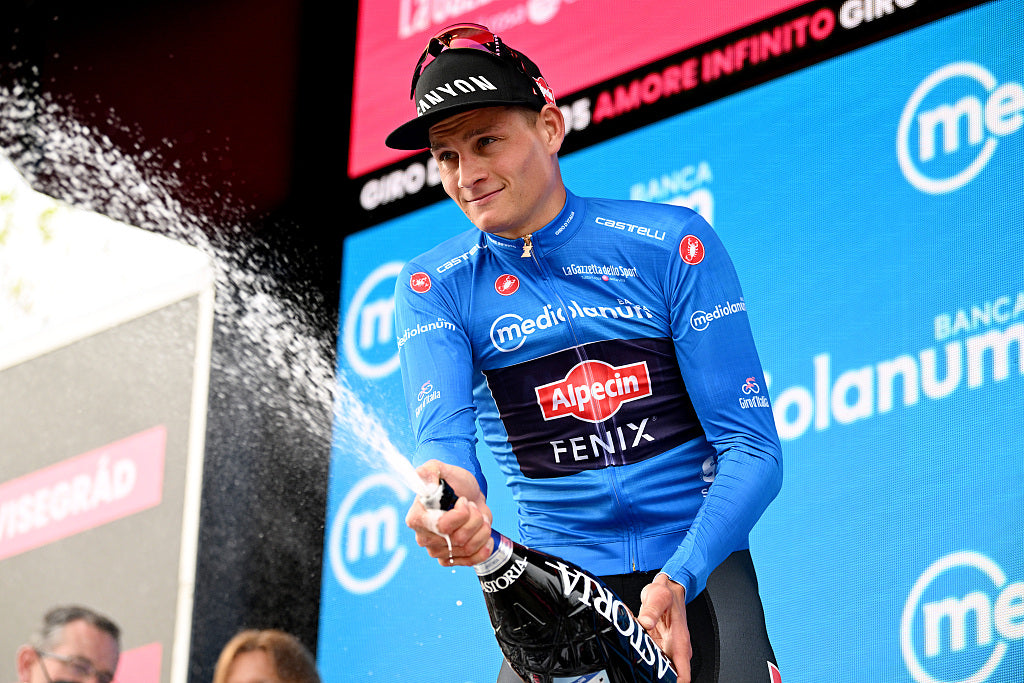
For the Mountains Classification:
The Blue Jersey (Maglia Azzurra)
This one focuses on the Climbers, awarding points for the first group of riders to cross Classified Climbs (registered as a certain difficulty and allocated with points as part of the race planning). In 2024 there are 45 Classified climbs across the Giro d'Italia, awarded across 6 different difficulty categories. Who ever has the highest Mountain Points score at the end of each race wins the stage, and is awarded the Blue Jersey (Maglia Azzurra) to wear the next day.
- The Mountains Classification first appeared at the Giro d'Italia in 1933.
- Points aren't always won by the best climber - sometimes an early breakaway (where a rider breaks off the front of the peloton) can win the points before the stronger climbers get anywhere near to the top. Some riders actually specialise in using breakaways to win points, rather than head-to-head sprinting!
- Summit finishes carry extra points & the most prestige, so riders will often battle particularly fiercely to win them. These are definitely ones to watch!
- Great examples of Mountain/Climber winners include Thibaut Pinot (who won the Blue Jersey in 2023) & Chris Froome (who won in 2018).
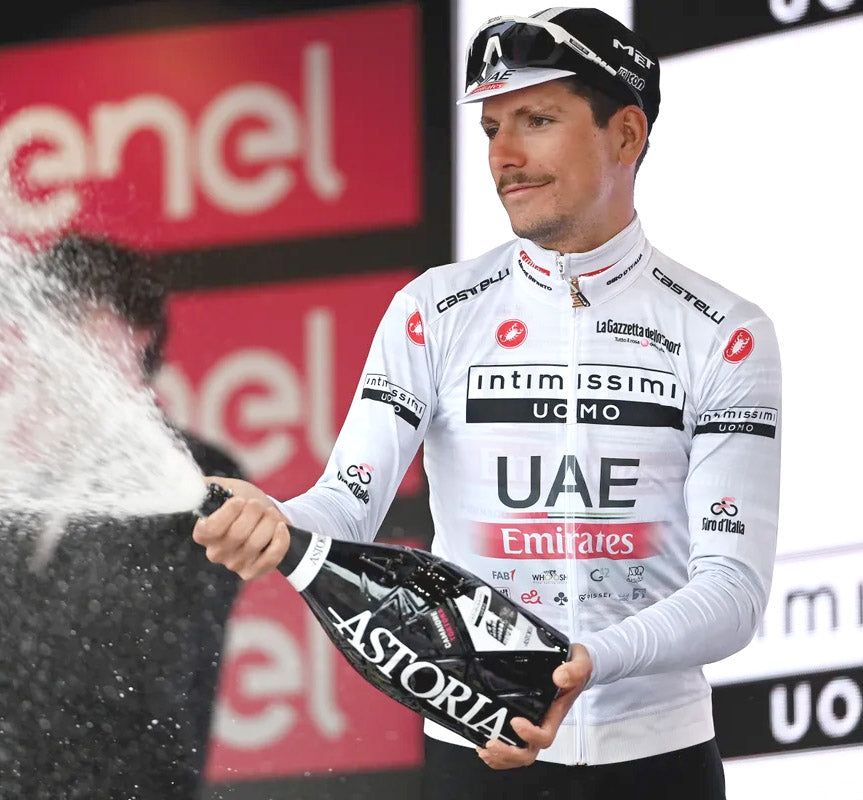
For the Best Young Rider:
White Jersey (Maglia Bianco)
This is another version of the General Classification competition, but reserved for riders under 25 at the start of the year.
Extra awards at the Giro
Super Team
This is the fastest Team overall. It is calculated by combining the top 3 finishers of each team, each day across the 21 stages. Which ever team has the lowest time overall wins. This has grown in importance to the teams in recent years, as getting the team on a podium is great for moral and the sponsors.
Intermediate Sprints
There are 2 of these in every stage, and are designed to allow a great breadth or riders to win points by encouraging breakaways on every stage.
Fuga Pinarello
The rider who spends the most time at the front of the Peloton (over the whole 3 weeks) is awarded this 'Break Away' title.
Fighting Spirit
Is awarded to the most combative rider. The selection is made by analysing social media comments from 7am to 7pm, and the winner gets a red bib number to wear the next day.
Fair Play Award
For the team that receives the lowest amount of penalties across the 3 weeks.
Montagana Pantani
An homage to the late and great Italian cyclist Marco Pantani, this award is given to the first rider to cross a specified climb. The selected climb is different each year, and usually something with particular difficulties or that Pantani had won upon in the past.
Cima Coppi
The first person to cross the highest point of the entire 3 weeks, wins this much coveted prize. Expect to see an all out brawl for this one! Previous climbs to host this award include the Motirolo (often described as the hardest climb in Italy), the Stelvio (and once the two together aka: the 'double shot!') and the unpaved Colle delle Finestre.
Past Winners of the Giro
Overall wins & stage wins at the Giro d'Italia are often career defining moments for riders. Only 22 riders have ever won the GC Classification more than once & just a handful have won 2 back to back... The most recent of which was Mallorca's very own Miguel Indurain in 1992 & 1993.
Alfredo Binda, Fausto Coppi, and Eddy Merckx have all won the race a record five times.
Mario Cipollini holds the total wins record with an incredible 42 Stage Wins. The only person to get anywhere close to that was Eddy Merckx who has 24 Stage Wins. Whilst he didn't beat Cipollini's record, he did manage to wear the pink Jersey on 77 Stages (a record on it's own).


Recent Men Winners:
- 2025 Simon Yates (UK) Visma - Lease a Bike
- 2024 Tadej Pogačar (Slovenia) UAE Emirates
- 2023 Primož Roglič (Slovenia) Team Jumbo-Visma
- 2022 Jai Hindley (Australia) Bora-Hansgrohe
- 2021 Egan Bernal (Columbia) Ineos Grenadiers
- 2020 Tao Geoghegan Hart (UK) Ineos Grenadiers
- 2019 Richard Carapaz (Ecuador) Movistar
- 2018 Chris Froome (UK) Team Sky
- 2017 Tom Dumoulin (Netherlands) SunWeb
- 2016 Vincenzo Nibali (Italy) Astana
- 2015 Alberto Contador (Spain) Tinkoff-Saxo
- 2014 Nairo Quintana (Columbia) Movistar
Recent Women Winners:
- 2025 Elisa Longo Borghini (Ita) UAE Team ADQ
- 2024 Elisa Longo Borghini (Ita) Lidl-Trek
- 2023 Annemiek van Vleuten (Ned) Movistar
- 2022 Annemiek van Vleuten (Ned) Movistar
- 2021 Annemiek van Vleuten (Ned) Movistar Orica–AIS
- 2020 Annemiek van Vleuten (Ned) Oric–AIS
- 2019 Annemiek van Vleuten (Ned) Oric–AIS
- 2018 Annemiek van Vleuten (Ned) Oric–AIS
- 2017 Megan Guarnier (USA) Boels0Dolman
Wins by country:
- Italy = 9
- Belgium = 7
- France = 6
- Spain = 4
- Switzerland = 3
- Russia = 3
- Great Britain = 2
- Colombia = 2
- Slovenia = 2
- Luxembourg = 2
- Sweden = 1
- Ireland = 1
- United States = 11
- Canada = 11
- Netherlands = 11
- Ecuador = 11
- Australia = 11
Prize Money!
This one must have crossed your mind at some point! Here we can fill that void with some hard numbers and show exactly how the total pot of €1,642,860 in prize money is divided up:
- General Classification Winner: €115,668, Second: €58,412, Third: €28,801.
- General Classification Top 20: ranging from Fourth: €14,516 to Twentieth: €2,863.
- Every day wearing Pink: €2,000 per day.
- Special Prize Fund Winner: €150,000, Second: €75,000, Third: €40,000.
- Special Prize Top 10: ranging from Fourth: €7,000 to Tenth: €5,000.
So whoever wins the GC this year will pocket €265,668, plus any other prizes won.
- Points Classification Winner: €10,000, Second: €8,000, Third: €6,000, Fourth: €4,000, Fifth: €3,000.
- Every day wearing Purple: €750 per day.
- Daily Points Classification: €700 for first, €400 for second, €200 for third.
- Mountains Classification Winner: €5,000, Second: €4,000, Third: €3,000, Fourth: €2,000, Fifth: €1,000.
- Every day wearing Blue: €750 per day.
- Best Young Rider Winner: €10,000, Second: €8,000, Third: €6,000, Fourth: €4,000, Fifth: €2,000.
- Every day wearing White: €750 per day.
- Stage Winner: €11,010, Second: €5,508, Third: €2,753, Fourth: €1,377, Fifth: €1,102, Sixth–Seventh: €826, Eighth–Ninth: €551, Tenth–Twentieth: €276.
- Fighting Spirit Daily Winner: €1,000.
- Fighting Spirit Overall: Winner €5,000, Second €4,000, Third €3,000.
- Breakaway Prize Daily Winner: €200.
- Breakaway Prize Overall Winner: €5,000.
This all seems pretty tasty for the winners, but remember - it's customary that the prize money is split between the team, and so riders don't actually pocket this amount. Cycling is a team sport after all.
Things to look out for
Hot Topics at the Coffee Stop
If the coffee croissant chat goes too deep into Giro d'Italia territory - don't worry, we've got your back! Nod along knowingly and drop one of these 'hot-topic' bombs to blow the conversation wide open. Everyone will chip in and assume you know what you're talking about:
Recap on last years talking points:
- The 109th edition starts in Bulgaria. First time the Giro has ever rolled out from Bulgaria, and only the 15th time it's started outside Italy in 109 editions. Three opening stages along the Black Sea coast before the race transfers south to Italy. Cycling's biggest race continues its slow and steady internationalisation, a Grande Partenza from somewhere new every couple of years now.
- No Pogacar this year. After his obliteration of the 2024 Giro (six stages, mountains jersey, nearly ten minutes margin), the great man has decided not to come back to defend it. He's saving himself for the Tour de France in July, where he's trying to make it five in a row. So for the first time in a while, the Giro is genuinely open.
- Vingegaard's first Giro. Two-time Tour de France winner, twice runner-up to Pogacar, and finally trying his luck at the Corsa Rosa. The question is whether the Dane who beat Pogi on the Galibier in 2023 is still the same rider. He's looked sharp through the spring. The route is built for him. If he can't win this, the question marks start to multiply.
- Roglič at it again. Five-time Grand Tour winner, never once won the Giro despite leading it into the final week twice. Now 36, on his second year at Red Bull - BORA - Hansgrohe, and back for what might genuinely be his last serious shot. Italian fans have a soft spot for him, partly the determination, partly the Slovenian humility, partly the sheer "how has he not won this yet" of it all. Could 2026 finally be his?
- Bernal's quiet comeback. Five years on from the crash that nearly killed him, Egan Bernal is back at the Giro he won in 2021. Ineos around him. Legs that have been there before. He's not the favourite, but he's not nowhere either. The story everyone secretly wants to see.
- Trofeo Senza Fine, the endless trophy. You have probably seen the fantastic spiralling trophy for the GC winners of the Giro d'Italia. But one thing we've all asked ourselves, is "do they have to weld new bits on each year, to make room for the new winners?" If they do, how big will it be in 10 years time?!
A quick note on the writing process
Everything we write and review we do through passion for the sport & elove of the process. We are not sponsored and we aren't briefed. We write about the things that helped us, and we hope that they help you too!